The warming earth, the changing light
Reading Jenny Offill's Weather during England's hottest June on record

On the weekend of the summer solstice I went camping for a night with two friends, one I’ve known for nearly a decade, the other a new acquaintance. We took the train to Battle, just outside of Hastings, and paused there before walking to the nearby camp site. I went into a shop looking for ice-creams. All but one of the fridges had gone out and so all the chilled and frozen items were crammed in there together. I bought one of the last boxes of lollipops and then went into a charity shop next door and picked up a copy of Jenny Offill’s Weather, thinking it might be nice to have something to read on the train home the next day.
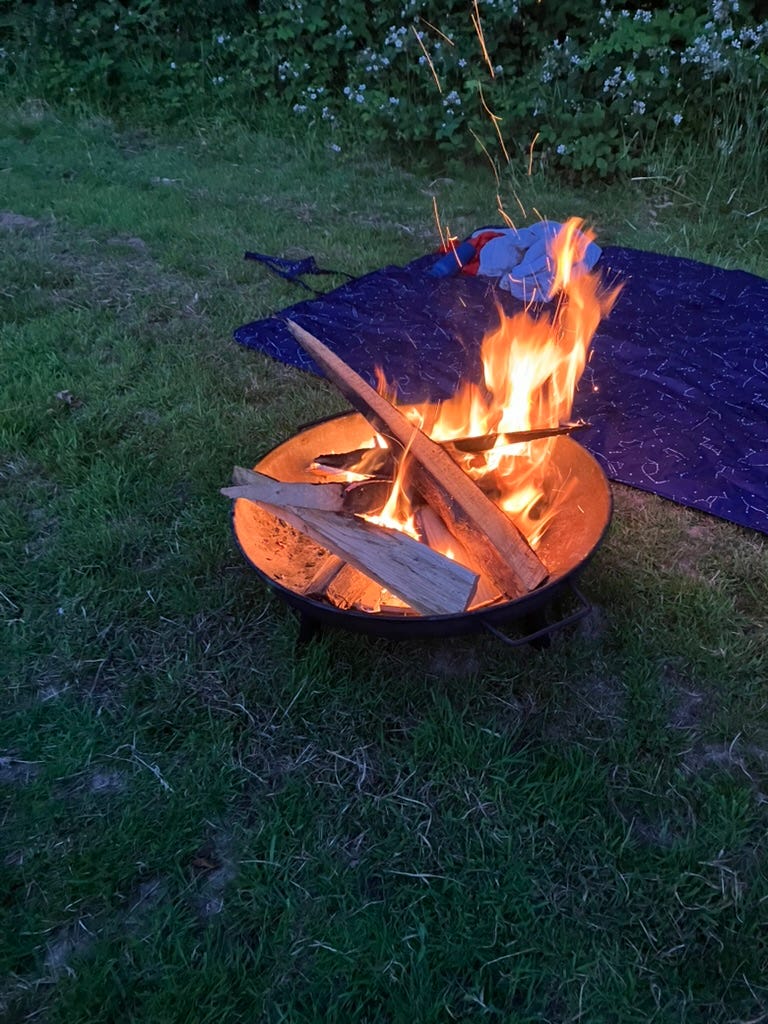
That evening, we cooked hot dogs and sat around our campfire, watching it burn down. The stars came out and we laid back on our blanket on the grass and looked at them. Time passed, but I didn’t feel it passing. There was a particular rightness about being there, in the night air, something elemental. It was impossible not to think about the past – my childhood, but also, further back, to the millennia of human life when we were bound so much more closely to nature.
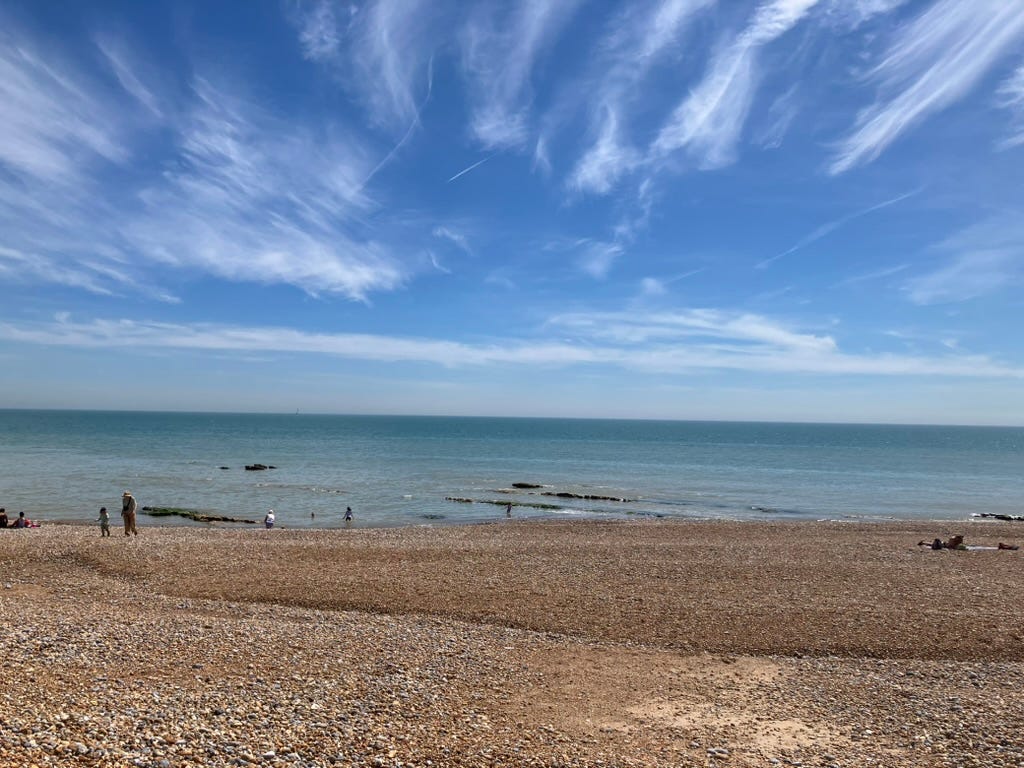
The next day, we took the train to St Leonards and lay on the beach. It was hot, shadeless, and we debated going into the water. One of my friends got her phone out and checked the sewage levels. It was safe – no recent discharges nearby – but we didn’t have swimsuits. I went in in my faded underwear, surprising myself with my own lack of embarrassment.
There is plenty I dislike about my body, and it was the middle of the day, in full view of the seafront promenade, the shore full of picnickers. But all around us, people were changing under towels, and I thought, who cares? I’m just another body. And – no one here is looking at me. For years of my life I avoided exercising in public because I hated the feeling of being observed – or maybe it would be more accurate to say that I feared judgement. Not only of my appearance, but also my lack of competence, my visible effort. I went in up to my shoulders and let myself be held by the sea, feeling it lifting me up and putting me down again.
Back on the beach, I started reading Weather. It’s a short book, written in vingettes, and I kept reading on the train home, and later in my stuffy flat back in London, lying on the sofa in front of a fan. Published in 2020, it’s a book about the poly-crisis – climate change, the political chaos of the past decade, the anxiety of our times – and also about how we go on living through it. It is, in a way, a perfect book to read in our current heatwave.
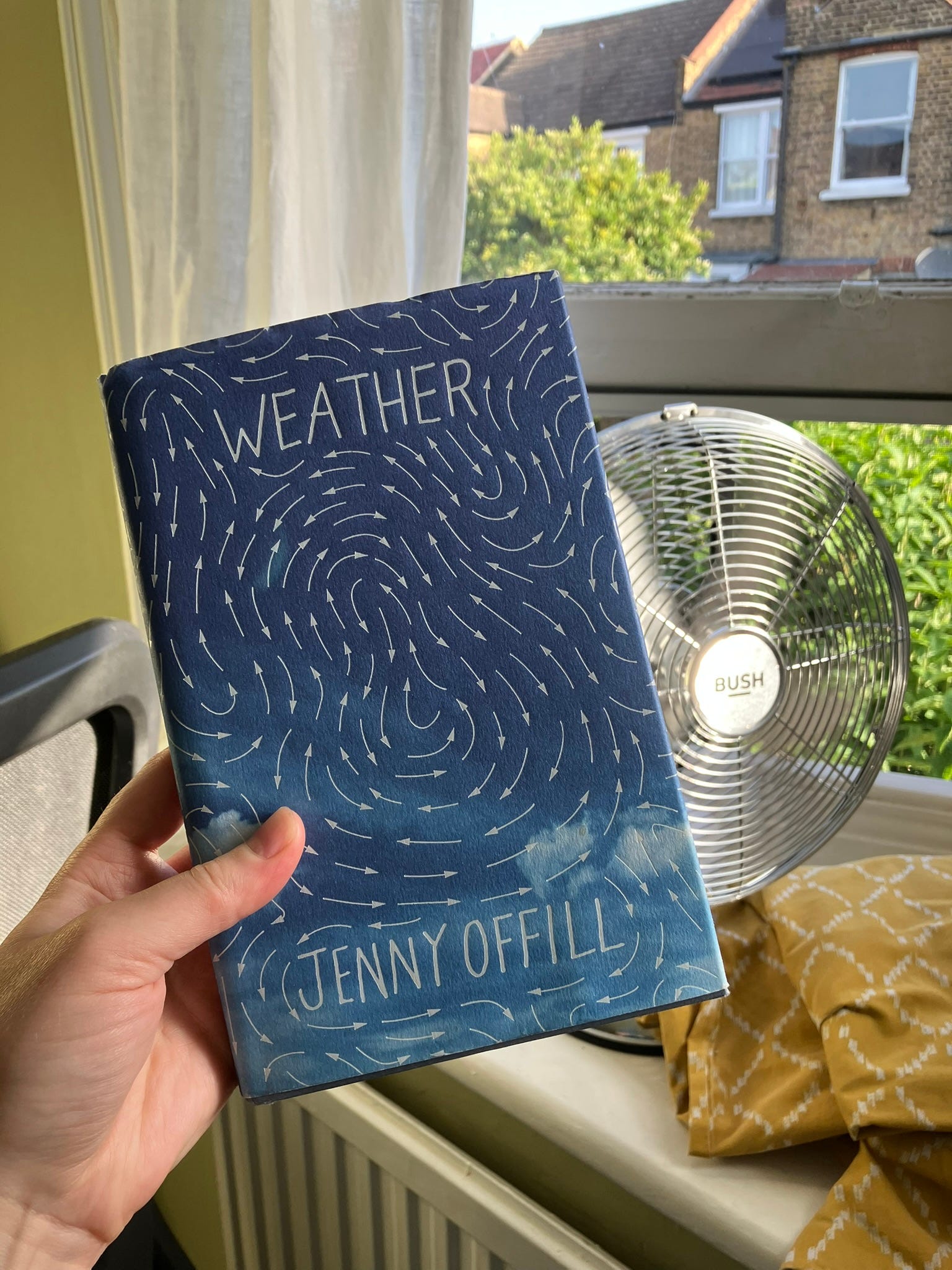
As I write this, it is early morning, and I am sitting with all the windows open, the fans on. Since Tuesday, a ‘red alert’ for heat has been active in London, and we have been told to avoid non-essential travel. Yesterday afternoon, I saw a TFL worker helping a man who had collapsed on the platform, and the building where I work has put a pitcher and cups by the door for delivery drivers who are still working in the heat. Trains are delayed – allegedly because the tracks are melting – and the temperatures have reached unprecedented heights, breaking the record for the highest temperature in England in June on Wednesday, and then breaking it again on Thursday, and again on Friday. The UK is not set up for this kind of heat. The housing stock here is the oldest in Europe, and most of our homes were built for a rainy, mild climate, designed to keep heat in and not out.
There are quite a few English novels set amid heatwaves — many of them the heatwave of 1976. Writers like to use the weather as a metaphor for tension, for claustrophobia, for simmering violence. All this relies on the understanding that this kind of weather is an abberation, a sign that things are not as they should be. But the weather is changing, that abberation shifting into a new expectation, and right now, when the summer days are at their longest, we feel it the most. We rise earlier, we sleep later, we slow down in the heat of the day, doing our best to keep cool, eating once the sun starts to fall lower in the sky. The rhythm of life shifts, if only temporarily.
What is it that I’m trying to say here, as I string the scenes of this past week together? Maybe: that we are of the world, not apart from it. That despite our best efforts, we are animals still, keeping ourselves cool, keeping one another safe, waking and sleeping with the changing light.